


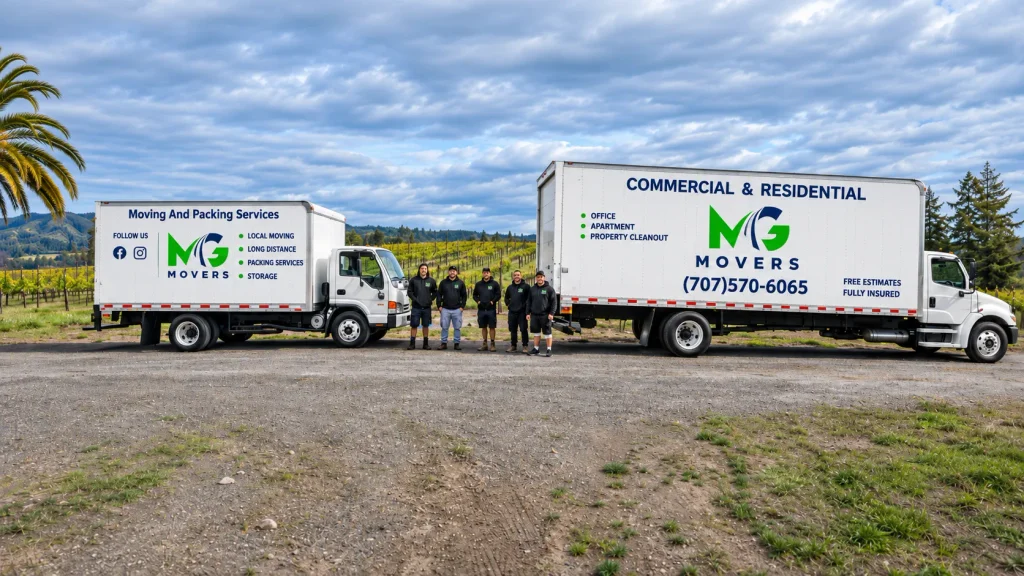
Commercial moving during the holidays can make sense for businesses with lighter customer demand, fewer employees on-site, or a planned closure. It is not automatically the best time to relocate. The right window depends on staffing, building access, technology readiness, and how quickly your business must return to normal operations.
For a Sonoma County owner, the useful question is not simply whether December is quieter. It is whether the proposed move fits the actual work calendar at both locations. Planning a relocation from a Santa Rosa office to a space in Rohnert Park, for example, requires more than reserving a truck. Businesses exploring commercial moving services in Sonoma County should first define what must stay operational, what can be packed early, and when the new premises will be ready.
Why Some Businesses Consider Relocating During the Holiday Slowdown
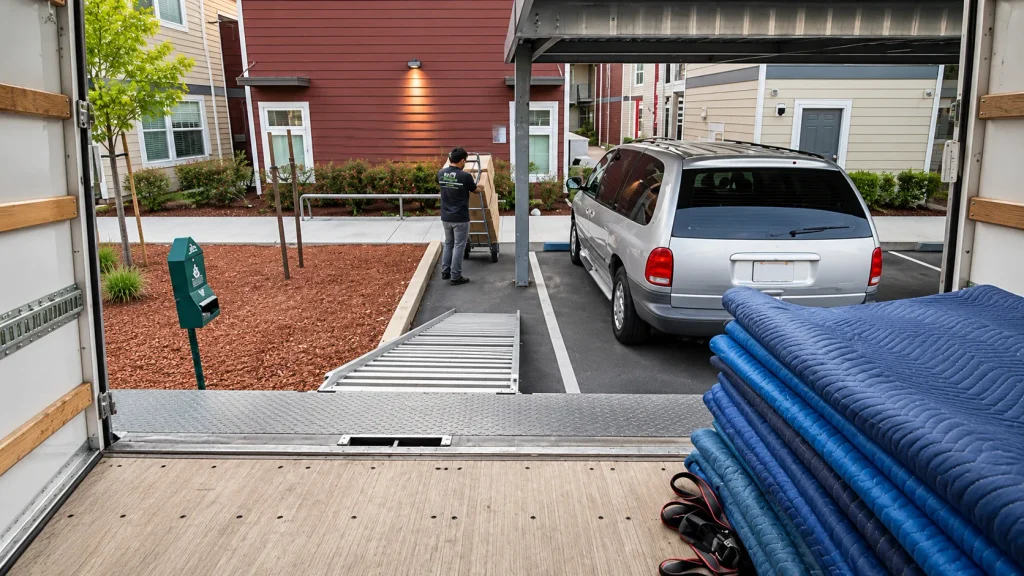
A quieter office can create room for a transition
Some professional services firms, administrative offices, and appointment-based businesses see fewer people on-site near year-end. Employees may be taking planned leave, clients may have limited meeting schedules, or a company may already have a short closure on the calendar. If fewer workstations are needed on a particular day, furniture and boxes can sometimes move with less interference to routine operations.
That benefit is specific to the business. A retailer preparing for holiday shoppers, a restaurant serving seasonal crowds, or a company handling year-end financial deadlines may have little flexibility. Even offices with fewer employees present can have critical reporting, payroll, or customer-service work that cannot stop.
A fresh location may align with the new year
A holiday relocation may allow a business to enter January with its desks, storage, and customer-facing areas arranged at the new site. It can also make sense when a lease expires near year-end or when renovations are complete before employees return. But a calendar milestone is not a substitute for a readiness check. Moving into a space without working internet, appropriate access, or approved occupancy arrangements can cause more disruption than postponing the move.
Holiday schedules introduce their own risks
Property managers, building engineers, security personnel, technology vendors, and employees may have reduced schedules during the same period. Access to a loading dock or elevator may be more restricted, not less. Before choosing a date, ask whether every party needed for the move and reopening can actually support that date. Do not assume that a holiday or weekend automatically means a moving crew or building representative will be available.
How to Plan a Commercial Move Without Unnecessary Disruptions

Start with the operating schedule, not the moving date
Identify the hours when customers need to reach your business and the activities that generate revenue or keep services running. For an office, this might include phones, appointment systems, computers, or access to client records. For a store, it could be the point-of-sale system, inventory deliveries, and customer pickup windows. Decide which functions can pause, which can run remotely, and which need to remain available throughout the transition.
Then work backward from the first day the new location must operate. Leave time for setup and testing instead of treating the truck’s arrival as the finish line. A business that must open on Monday morning may need to complete the physical move earlier, with an internal team available to arrange furniture, verify utilities, and test essential systems.
Give one person responsibility for the whole plan
Choose an internal relocation coordinator who can make decisions, track approvals, and communicate with employees, property managers, the moving company, and outside vendors. This person does not need to perform every task. They need to know who owns each one and what the deadline is. Cushman & Wakefield’s office relocation guide likewise emphasizes assigning a move manager and planning technology needs alongside physical logistics.
Sequence the work in manageable stages
Begin with items employees do not need daily, such as archived materials, surplus chairs, and infrequently used supplies. Keep critical desks, printers, shared equipment, and active files available until the business is ready to switch locations. Create a simple room-by-room destination plan so the moving crew knows where approved items belong. Where the schedule and property rules allow, evening or weekend moving may be worth discussing, but confirm the scope and availability before announcing a date.
Keep technical work separate from physical transportation. Your business or its IT provider should manage data backups, device shutdowns, internet activation, telephone routing, and reconnection or testing of systems. A mover may transport equipment within the agreed scope, but that does not mean it will install networks, disconnect servers, or configure workstations.
Building Access, Parking, and Property Management Requirements
Check the rules at both addresses
Commercial properties often have different rules from homes. Ask the manager of each building which entrance movers must use, whether service elevators need reservations, when loading is permitted, and where a commercial vehicle can stand. Some properties request a Certificate of Insurance (COI) from the moving company, sometimes with specific wording or limits. Confirm whether one is required and share the building’s instructions before finalizing the schedule.
Do not overlook the simple measurements. Narrow doors, stairs, elevator interiors, hallways, loading ramps, and distance from the truck to the entrance can change how furniture is moved. If a business is relocating between a downtown Santa Rosa property and a retail or office complex in Petaluma, each location may require a separate access plan. The same is true for locations within a single city.
What does Santa Rosa require for reserved moving parking?
The City of Santa Rosa states that certain on-street metered spaces and spaces in off-street parking lots can be reserved for moving activities. Its official meter reservation guidance says requests should be made at least 72 hours in advance and asks applicants to identify the specific meter or parking spaces. The city describes reserved spaces as marked to keep other vehicles from occupying them on the scheduled day.
This is not a blanket permit to park a moving truck anywhere, nor does every commercial move require a meter reservation. First identify where legal loading is possible. If the planned route needs metered curbside space, review current city instructions and coordinate any reservation with the property manager and moving company. Holiday counter hours and street conditions deserve an additional check before the move.
Prepare for winter conditions in Sonoma County
Late fall and winter can bring rain to the North Bay. If boxes or office furniture must cross an exposed sidewalk or loading area, discuss the route, surface protection, and whether entrances will be accessible. Allow flexibility if weather affects safe loading. For storefronts, also consider how moving activity may affect customer access, nearby businesses, and any posted parking restrictions.
Preparing Your Office or Commercial Space for Moving Day
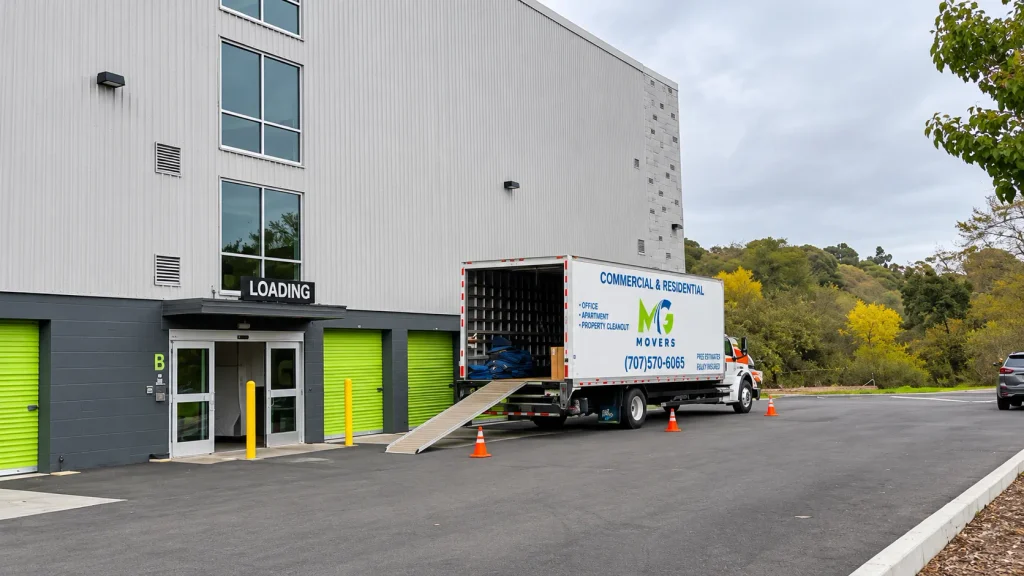
A practical office relocation checklist should divide tasks between the business, the property team, technology providers, and the moving crew. That division matters because many delays arise from work that nobody explicitly owns. The following preparations are generally the responsibility of the business unless an alternative arrangement is confirmed in advance:
- Furniture and floor plans: Decide which desks, shelving units, tables, and chairs are moving. Mark their destinations and identify pieces that may need disassembly.
- Inventory: Count boxes, workstations, fixtures, and large items. Separate anything being donated, recycled, stored, or left behind.
- Employee assignments: Tell staff what to pack, label, or take home. Assign a coordinator for each department or work area if appropriate.
- Confidential information: Secure personnel records, customer files, financial documents, passwords, and devices containing sensitive information. Decide who will personally control access to them.
- Technology: Have an appropriate IT contact back up data, plan system shutdowns, arrange internet service, and test essential devices at the destination.
- Building permissions: Confirm keys, badges, alarms, elevator time slots, loading access, and any property-specific insurance documents.
- Communication: Notify employees, clients, vendors, and delivery providers about any temporary service changes or updated address details.
The moving company’s role can include transporting agreed office furniture, workstations, and equipment, as well as furniture disassembly and reassembly when included in the quoted scope. If your business needs unusual handling or has equipment requiring manufacturer-approved procedures, identify it early rather than assuming standard moving service will cover it. Managers should also decide who will be present to sign off on loading, unloading, and any outstanding items.
Do not forget the address transition
Update the channels customers actually use: website contact pages, online business listings, appointment reminders, invoices, email signatures, vendor accounts, and delivery instructions. Determine when the new address should become public so customers are not sent to a site that is not operating yet. For businesses with an Employer Identification Number application on file, the IRS guidance on Form 8822-B explains how to report a change in business mailing address or location. Review other applicable licensing, registration, and postal requirements separately.
What Information Should You Provide When Requesting a Commercial Moving Quote?
A useful quote begins with an accurate description of the job. MG Movers needs the current and destination addresses, your preferred move date and time window, the inventory to be moved, access conditions, and any requirements that affect handling or scheduling. Be clear about business hours and the date by which essential operations must resume. Photos of larger items or difficult access points may help clarify the scope.
Provide a realistic count of desks, chairs, cabinets, boxes, and fixtures, not just the square footage of the office. Mention stairs and elevators at both locations, where a truck can load, and whether property management imposes a restricted move window. If your staff is packing files but expects the movers to handle furniture disassembly, say so. These details help both sides discuss appropriate labor, timing, and responsibilities.
| Planning consideration | Information to share | Potential impact on the move |
|---|---|---|
| Addresses and route | Full pickup and destination addresses, including suite and floor | Travel planning and the number of loading points |
| Preferred schedule | Date, available hours, and reopening deadline | Crew scheduling and the order of work |
| Furniture and inventory | Approximate quantities, dimensions of oversized items, and photos when helpful | Handling plan, loading time, and equipment needs |
| Stairs and elevators | Floor levels, elevator dimensions, and reservation windows | Access constraints and possible delays |
| Parking and loading | Permitted loading zones, truck access, and carrying distances | Truck positioning and loading efficiency |
| Property requirements | COI instructions, security access, loading rules, and management contacts | Approval requirements before moving day |
| Special handling | Fragile items, heavy furniture, sensitive equipment, or unusual access | Need to confirm what is included or excluded |
| Business operations | Customer hours, employee schedule, and essential workstations | Sequence for packing, moving, and reopening |
One useful question to ask during the estimate is: “What do we need to prepare ourselves before your crew arrives?” The answer should clarify who packs which items, how furniture will be handled, what building access must be secured, and whether the requested evening or weekend window is available. A clear division of responsibilities is more valuable than a vague promise of a disruption-free move.
A Practical Countdown for a Holiday Business Relocation
As soon as the relocation becomes likely
Review lease obligations at both properties, select an internal coordinator, assess business cycles, and confirm the destination’s expected readiness. Start a full inventory and list any technology or customer-service functions that cannot be interrupted. If the premises need construction, cabling, inspections, or approvals, the work may require a longer lead time than the physical move itself.
Several weeks before the proposed move
Request moving estimates with the same scope so they can be compared fairly. Ask each property manager about loading access, reservations, holidays, and COI requirements. Develop an employee communication plan and identify any vendors who must work before or after the movers. If a move falls near Thanksgiving, Christmas, or New Year’s Day, check the actual availability of everyone involved rather than treating the date as ordinary.
During the final week
Confirm addresses, the item list, arrival instructions, authorized contacts, building access, and the order in which departments will move. Finish packing nonessential items, label boxes by destination room, and make arrangements for documents that should not travel with ordinary office contents. Ensure the new space is accessible and that basic utilities and essential services have been checked by the responsible parties.
After the furniture arrives
Walk through the new location, compare delivered items against the inventory, and flag anything requiring follow-up. Give the internal technology team time to reconnect and test systems. Employees should know where they will work, how to enter the building, and whom to contact about missing items or access problems. The real completion point is when the business can perform the functions it planned to restore.
Frequently Asked Questions
Is it a good idea to move an office during the holidays?
It can be, particularly when employees are already scheduled to be away and customer demand is lighter. A holiday move is less attractive if the business faces seasonal deadlines or depends on vendors with limited holiday availability. Compare the proposed date against operations, staffing, building access, and readiness at the destination.
Can a commercial move take place outside normal business hours?
Some commercial moves can be scheduled for evenings or weekends, depending on moving crew availability and the rules at both properties. Ask whether loading docks, elevators, security staff, and building access are available for the requested hours. MG Movers offers after-hours options, but a specific date and schedule must be confirmed.
How far in advance should a business plan its relocation?
Start once the destination and likely moving period are known. A small office with simple access may require less coordination than a multi-floor relocation involving vendors, furniture assembly, and technology changes. Holiday schedules can limit options, so obtain quotes and confirm property requirements early instead of relying on a universal booking deadline.
What building information does a commercial moving company need?
Provide the pickup and destination addresses, suite numbers, floor levels, stairs, elevator details, loading zones, and any restricted hours. Share property management contacts and Certificate of Insurance requirements, if applicable. Explain whether a truck can stop near the entrance and whether keys, badges, or advance reservations are needed for either building.
How can employees prepare for an office relocation?
Give employees a clear timeline, labeling instructions, and an explanation of what they should pack themselves. Assign responsibility for confidential documents and personal belongings, and identify the person coordinating each department. Tell the team when work at the new location is expected to begin and how changes will be communicated.
Who is responsible for moving and reconnecting office computers?
The business should coordinate backups, secure shutdowns, reconnection, and testing with its internal IT staff or a qualified technology provider. A moving company may transport approved computers and equipment within the agreed scope, but transportation is different from installing or configuring systems. Confirm responsibilities before setting the reopening schedule.
Whether you are moving a small office, a storefront, or a few workstations, the details at each address matter more than the distance on a map. If you are comparing moving services in Santa Rosa, focus on what the property permits, what your team must prepare, and when the new location can realistically support business activity.
MG Movers serves businesses in Santa Rosa, Rohnert Park, Petaluma, and surrounding Sonoma County communities. If the holiday season may be a practical relocation window for your business, share your addresses, inventory, preferred dates, and access requirements with MG Movers to discuss the scope and request a commercial moving quote.